
Which scuba diving courses do you really need? For a solid foundation, we recommend four essential scuba diving courses: Open Water Diver, Enriched Air Nitrox, Advanced Open Water with Deep Diving, and Stress & Rescue with React Right first aid training. Together, they build the skills, awareness and confidence to become a safer, more independent recreational diver.
The Camel Dive Club training team brings decades of experience teaching recreational divers and developing dive professionals in Sharm el-Sheikh. As an SSI Diamond Instructor Training Center, Camel has been introducing people to the Red Sea since 1986.
You have decided to learn to scuba dive. Before long, you discover an entire catalogue of courses, specialties and certifications. How do you know which ones you actually need? The choices can be overwhelming. There are courses for diving deeper, improving your buoyancy, navigating underwater, taking photographs and exploring wrecks. Some introduce genuinely new skills. Others focus on activities you may never be particularly interested in. And almost every course comes with another certification card.
After many years of teaching recreational divers and training instructors, we have developed a fairly clear opinion about which qualifications make the greatest difference to a diver’s abilities. The good news is that you do not need dozens of certifications to become a capable recreational diver. You need a solid foundation, the right progression and enough experience to turn what you have learnt into reliable skills.
If your ambition is to travel, explore different diving destinations and become a responsible buddy, there is a relatively straightforward training path worth following.
Start with a full Open Water Diver certification
If you already know that you want to become a diver, our recommendation is simple: take the full SSI Open Water Diver course.
Introductory experiences such as Try Scuba are excellent for discovering whether you enjoy breathing underwater. The Basic Diver and Scuba Diver programmes also have their place, particularly for people with limited time or specific needs. But they are not equivalent to a full Open Water Diver certification.
The Open Water course provides the essential foundation for recreational scuba diving. You learn how your equipment works, how pressure affects your body, how to plan and monitor a dive and how to respond to common problems underwater. You also develop the practical skills that every subsequent course will build upon, including buoyancy control, equipment management and communication with your buddy.
Once certified, an adult SSI Open Water Diver is trained to dive with an equally or more qualified buddy, within the limits of their certification and experience, to a maximum depth of 18 metres. That is already an enormous amount of underwater world to explore.
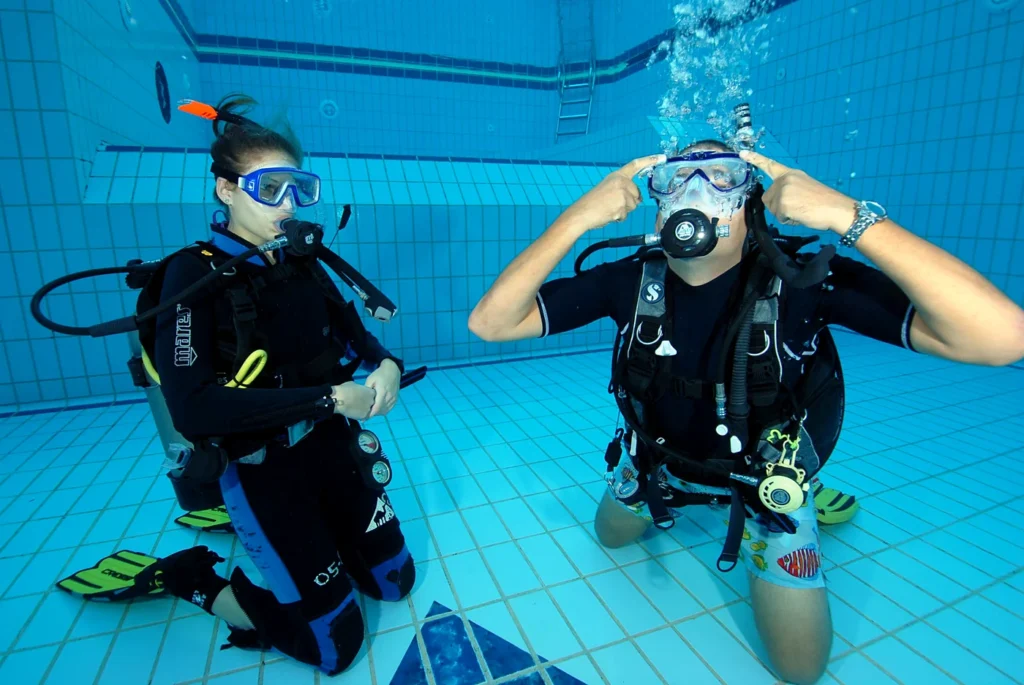
There is no need to rush towards greater depths immediately. The first dives after certification are an opportunity to become comfortable with your equipment, refine your buoyancy and discover how different conditions affect the experience. A good Open Water course should leave you with the skills and knowledge to begin diving responsibly, rather than simply having completed the minimum requirements for a certification card.
Learn to dive with Nitrox
The next qualification we would recommend is SSI Enriched Air Nitrox, particularly the programme covering mixtures with up to 40% oxygen.
Nitrox is a breathing gas containing a higher percentage of oxygen and a lower percentage of nitrogen than ordinary air. When used correctly, it can reduce nitrogen exposure during a dive and may allow longer no-decompression limits at certain depths. This makes it particularly useful on diving holidays, when you may be planning several dives over consecutive days.
But the real value of Nitrox training goes beyond extending your possible bottom time. You learn to understand oxygen exposure, analyse your breathing gas, establish its maximum operating depth and configure your dive computer correctly. These are valuable lessons in dive planning and personal responsibility.
Nitrox does not automatically make a dive safer, nor does it allow you to dive deeper. In fact, oxygen exposure imposes specific depth limits that must be respected. Learning to use it properly encourages a more thoughtful approach to gas management and dive planning.
At Camel Dive Club, 32% Nitrox is free for Nitrox-certified divers, making this qualification especially useful when diving with us. It is a highly accessible course with practical benefits that can accompany you throughout your recreational diving career.
Advanced training: become a more versatile diver
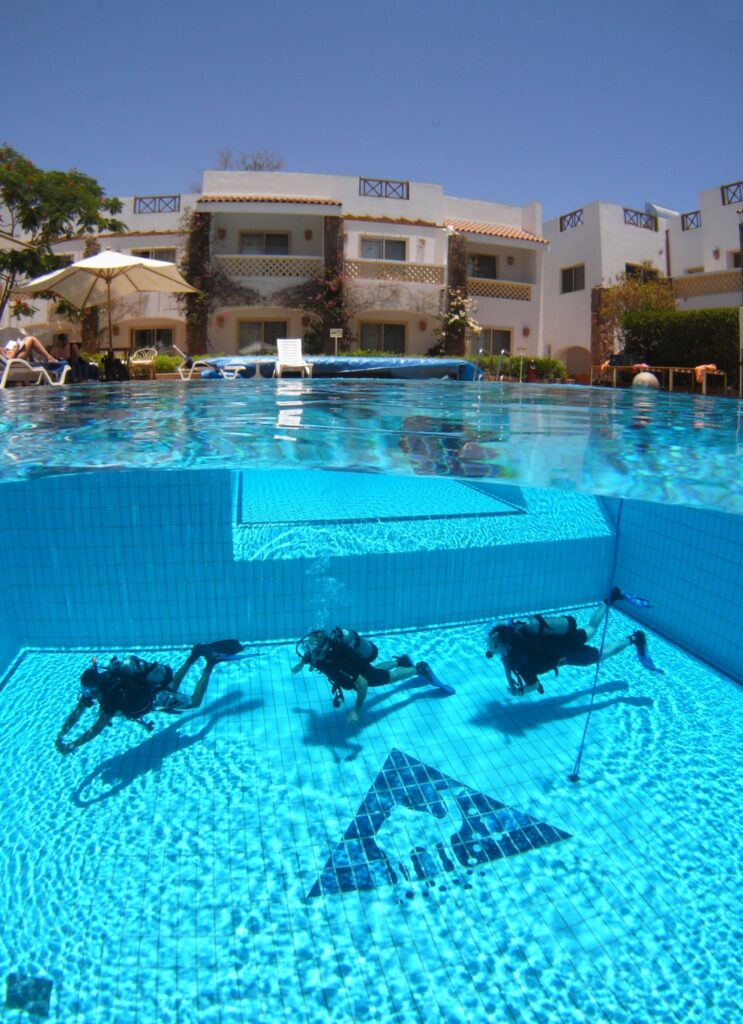
Once you have gained some experience as an Open Water Diver, the next step is to broaden your abilities. The SSI Advanced Open Water Diver programme introduces five different areas of diving through supervised training dives, including mandatory Deep Diving and Navigation components. This is an opportunity to experience different conditions and activities while continuing to develop your fundamental skills.
Navigation deserves particular attention. Learning to use a compass, recognise natural references and maintain awareness of your position underwater makes you a more useful buddy and a more independent diver.
Deep diving also introduces important considerations. As depth increases, gas consumption becomes more significant, no-decompression limits become shorter and the consequences of poor planning can become more serious. However, there is an important distinction between completing an advanced training dive and obtaining the full SSI Deep Diving Specialty. The latter provides more comprehensive training for recreational diving beyond 18 metres, up to the programme’s maximum of 40 metres. We recommend completing the full Deep Diving Specialty when you have gained sufficient experience and are ready to extend your diving range responsibly.
Not because every diver needs to reach 40 metres. Many of the most beautiful dives in the world are considerably shallower. The value lies in understanding how to plan and manage deeper dives properly, recognising the additional risks and knowing when a particular dive is beyond your experience or comfort level. Advanced training should make you a more versatile diver, not simply encourage you to go deeper.
Diver Stress & Rescue: the course that changes your perspective
If we had to identify the course that most significantly changes the way recreational divers think underwater, SSI Diver Stress & Rescue would be a strong candidate.
Until this point, much of your training has focused on managing yourself. You have learnt to control your equipment, monitor your gas supply, maintain buoyancy and respond to problems that might affect your own dive. Rescue training asks you to widen your attention.
You begin learning to recognise signs of stress in other divers, identify developing problems and intervene appropriately before a manageable situation becomes an emergency. You practise assisting tired or distressed divers, responding to emergencies at the surface and underwater, and organising an effective response when assistance is needed. The exercises can be demanding. They require you to apply skills while managing unfamiliar situations and making decisions under pressure.
But the most important lesson is often about prevention. An uncomfortable diver may communicate differently. Someone struggling with buoyancy may be distracted by their equipment. A buddy who seems unusually anxious before entering the water may need support or a change of plan. Learning to notice these signs changes the way you participate in a dive.
You become more attentive to your buddy and more aware of what is happening around you. You also learn that helping another diver must never mean unnecessarily endangering yourself.
Rescue training does not make you an emergency professional. It gives you practical skills, a better understanding of your responsibilities and a more realistic appreciation of what you can do when something goes wrong. For us, this is one of the most valuable steps in recreational diver education.
First aid, CPR and oxygen: skills worth having anywhere
Rescue training belongs alongside a recognised first aid qualification. SSI offers React Right, a programme covering emergency response skills including first aid, cardiopulmonary resuscitation (CPR), automated external defibrillator (AED) use and emergency oxygen administration.
These skills are particularly relevant to diving because an incident does not necessarily end when everyone reaches the surface. Knowing how to assess an emergency, provide appropriate assistance and support an injured person while professional help is arranged can make an important difference. Emergency oxygen administration is especially relevant in the management of suspected diving-related injuries, alongside prompt access to appropriate medical assistance.
First aid training also has obvious value outside diving. The ability to recognise an emergency and respond effectively is useful at home, at work and while travelling.
For SSI Diver Stress & Rescue certification, current first aid, CPR and oxygen provider training is required. React Right is one way to meet these requirements. Like other emergency response skills, first aid knowledge needs to be refreshed. A certification obtained years ago is no substitute for current training and regular practice.
Do you really need all those specialty courses?
This is where we would encourage new divers to be selective. Specialty courses are not inherently unnecessary. Some provide essential training for particular environments or activities, while others offer an enjoyable opportunity to develop a specific interest.
If you want to dive in a dry suit, learn how to use it properly. If underwater photography becomes your passion, dedicated instruction may help you progress. If you intend to explore wreck interiors, specialised training is essential. But there is no reason to enrol in every available course simply because it exists.
Before choosing a specialty, ask yourself what you expect to learn and how you will use those skills. Will the course prepare you for an activity you genuinely want to pursue? Will it address a weakness in your diving? Does it provide supervised practice that you would struggle to obtain otherwise? If the answer is yes, it may be a worthwhile investment. If your only motivation is collecting another certification, consider spending that time making more dives instead.
A certification records that you have completed a particular training programme. It does not tell the whole story of how comfortably or consistently you can apply those skills.
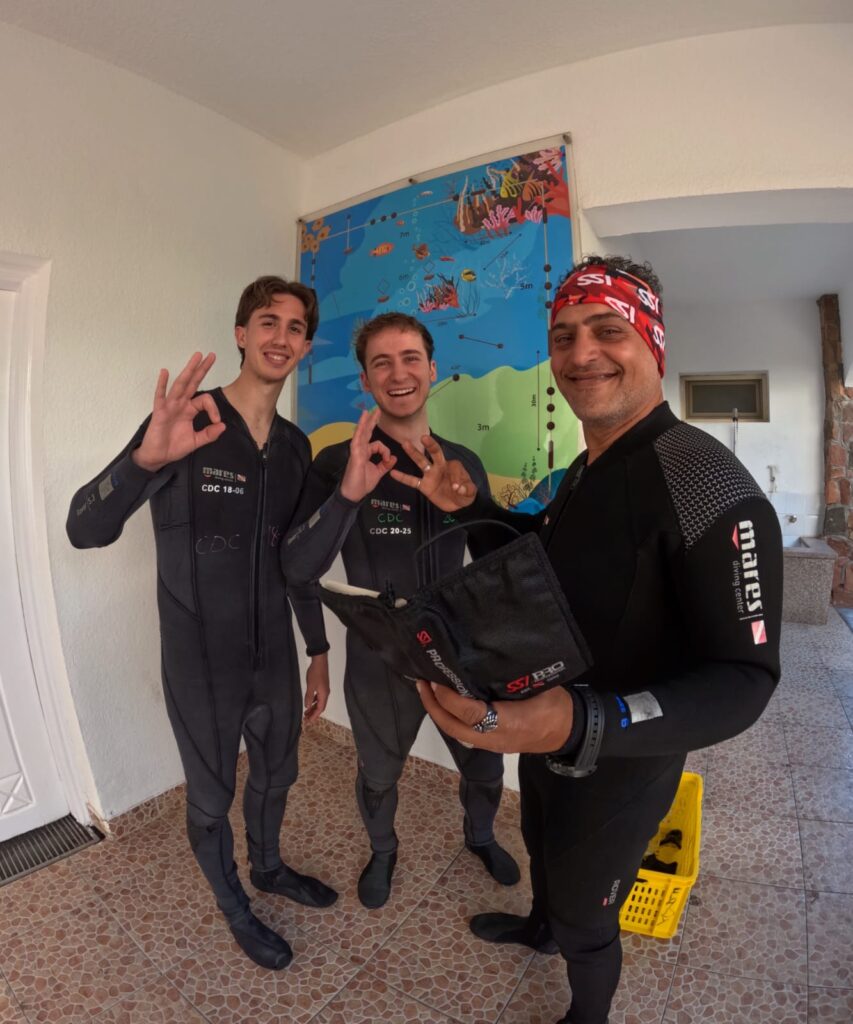
The qualification that does not come on a card: experience
There is one essential ingredient that no training programme can provide on its own: time underwater.
You can complete several courses in a relatively short period, but becoming a capable diver requires practice in real conditions. Your buoyancy improves as you learn to anticipate changes rather than constantly correct them. Your gas management becomes more intuitive as you understand your own consumption. You become more comfortable with different entries, currents, visibility and dive procedures.
And you gradually learn to recognise when a dive is appropriate for your abilities. This last skill is particularly important. A well-trained diver should be able to recognise personal limitations, communicate concerns and decide not to dive when conditions or circumstances are unsuitable. There is no certification that removes the need for good judgement.
We encourage divers to gain experience between courses whenever possible. Enjoy the dives you are already qualified to make, practise the skills you have learnt and pay attention to the decisions made by experienced guides. Ask questions. Review your dives. Notice what went well and what you could improve. A logbook filled with meaningful experiences is every bit as valuable as the certifications you carry.
Four training stages, a lifetime of diving
For someone starting from scratch, our recommended pathway is straightforward. Open Water Diver provides the foundation. Enriched Air Nitrox develops your understanding of breathing gases and dive planning. Advanced Open Water Diver, followed by the full Deep Diving Specialty, broadens your experience and prepares you for more demanding recreational dives. Stress & Rescue, supported by current first aid, CPR and oxygen training, develops your ability to recognise problems and assist other divers.
Your training path at a glance
01
The foundation: equipment, dive planning and buoyancy. Dive with a buddy to 18 metres.
03
Broaden your experience, then take the Deep Diving Specialty for dives beyond 18 metres, up to 40.
04
Spot problems early and help other divers, with current first aid, CPR and oxygen training.
Between every step: real dives. Add specialties only when they serve a goal.
This is not the only possible training pathway, and the order and timing should always reflect your experience and readiness. But together, these courses provide a particularly useful foundation for someone who wants to enjoy recreational diving in different parts of the world. You will still need to adapt to local conditions, respect the limits of your qualifications and seek additional training for specialised activities. What you will have is a solid set of skills on which to build your diving future.
At Camel Dive Club, we have been teaching people to dive in Sharm el-Sheikh since 1986. As an SSI Diamond Instructor Training Center, we believe that good training should prepare divers for the experiences they want to have, rather than simply encourage them to accumulate certifications. Our aim is to help you become a diver who understands what they are doing, recognises their limitations and can enjoy the underwater world with greater confidence. Explore our SSI courses, or write to info@cameldive.com to discuss the training path that best suits your experience and goals.
Because the real measure of your progress is not how many certification cards you own. It is what you have learnt to do with them.
Scuba diving courses FAQs
The full SSI Open Water Diver course. It gives you the foundation every later course builds on, and certifies you to dive with a buddy to a maximum depth of 18 metres.
No. Each course is a choice, not an obligation. Stop where it makes sense for the kind of diving you want to do, and add training when you have a clear reason for it.
No. A specialty is a course where you learn and practise specific skills, such as Nitrox or Deep Diving. A recognition rating, such as SSI Advanced Specialty Diver, is awarded when you combine a number of specialties with logged dives.
Yes, especially on dive holidays with several dives over consecutive days. Nitrox can extend no-decompression limits at certain depths, but it does not let you dive deeper. At Camel, 32% Nitrox is free for Nitrox-certified divers.
Yes. SSI requires current first aid, CPR and oxygen provider training. React Right is one way to meet this requirement.
Both are recognised worldwide, and dive centres generally accept certifications from either agency. Camel trains divers with SSI, and what makes the biggest difference is the quality of your instructor and the time you spend in the water.