

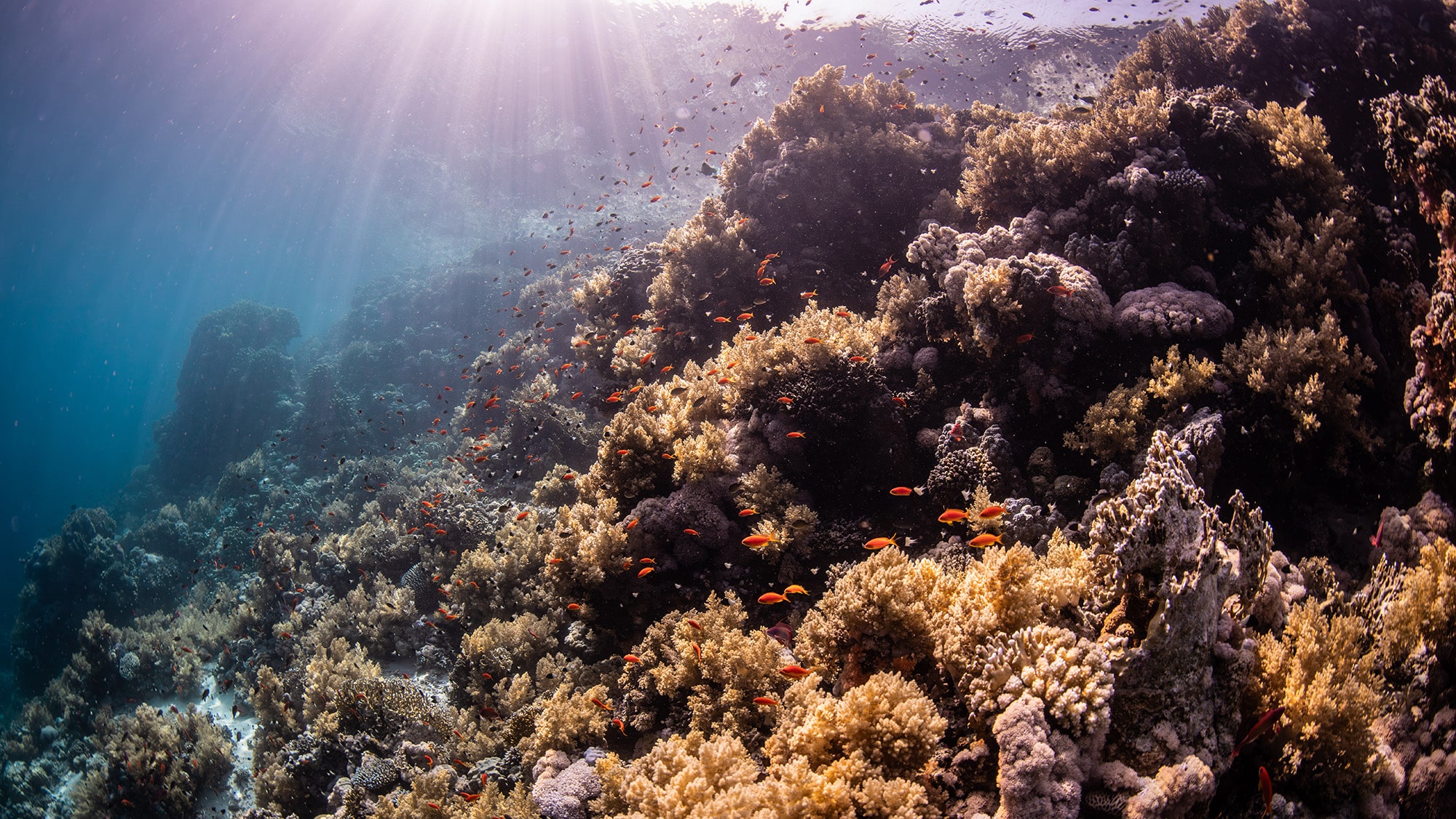
Words by Francesco Pipino and pictures by Valentina Cucchiara and Pipino
Anyone who loves the Red Sea eventually asks the same question: when is the best time to dive in Sharm el-Sheikh?
The answer may come as a surprise. There is no single “best” season. Every season has its own character, and each offers something unique. Winter often brings encounters with large pelagic species, spring fills the reefs with renewed activity, and autumn offers ideal temperatures both above and below the surface.
And then there’s summer.
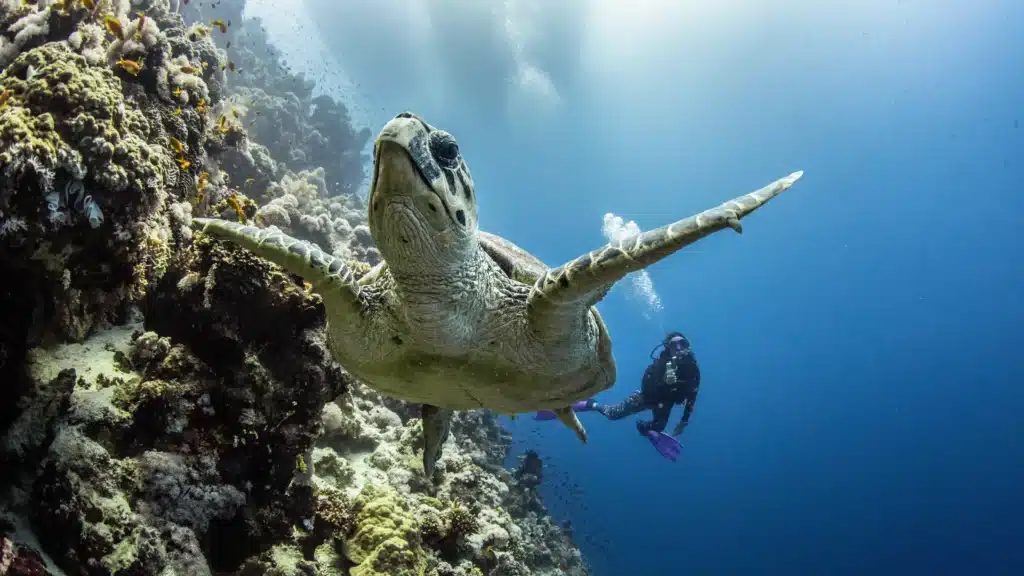
August Diving in the Red Sea: Why Summer Is Different
Many divers choose to visit Sharm El Sheikh between June and September for the warm water, which reaches 28–30°C, the outstanding visibility, and the long sunny days. But those who truly know the Red Sea understand there’s another reason: one that’s even more fascinating.
Between June and September, the sea changes.
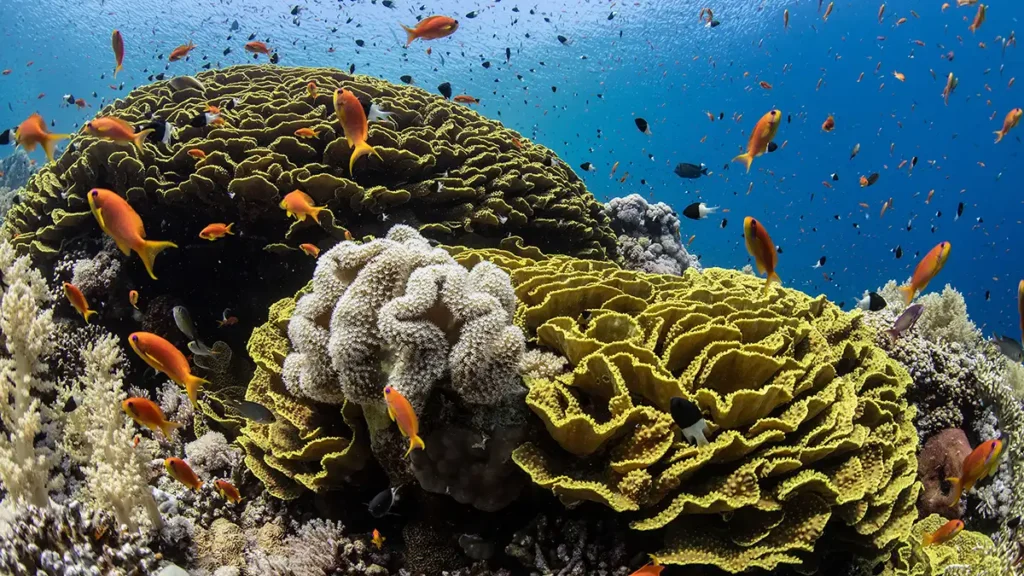
The reefs don’t. They remain spectacular throughout the year. What changes are the main characters.
During these months, some of the most iconic dive sites in Ras Mohammed National Park and the Straits of Tiran become gathering places for enormous schools of fish. It’s a natural phenomenon that repeats itself every year, transforming already spectacular dives into unforgettable experiences.
That’s why so many divers return to Sharm year after year, not to repeat the same dives, but to discover how the very same reefs can tell a completely different story depending on the season.
Shark & Yolanda Reef: When the Blue Comes Alive
At Shark & Yolanda Reef, the spectacle can be truly breathtaking.
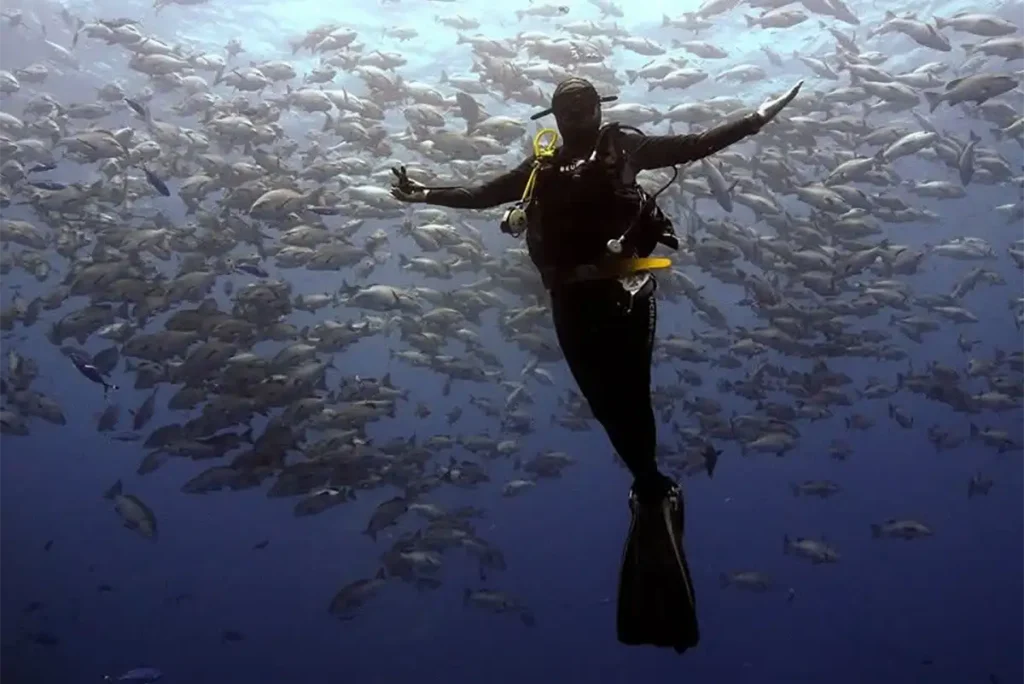
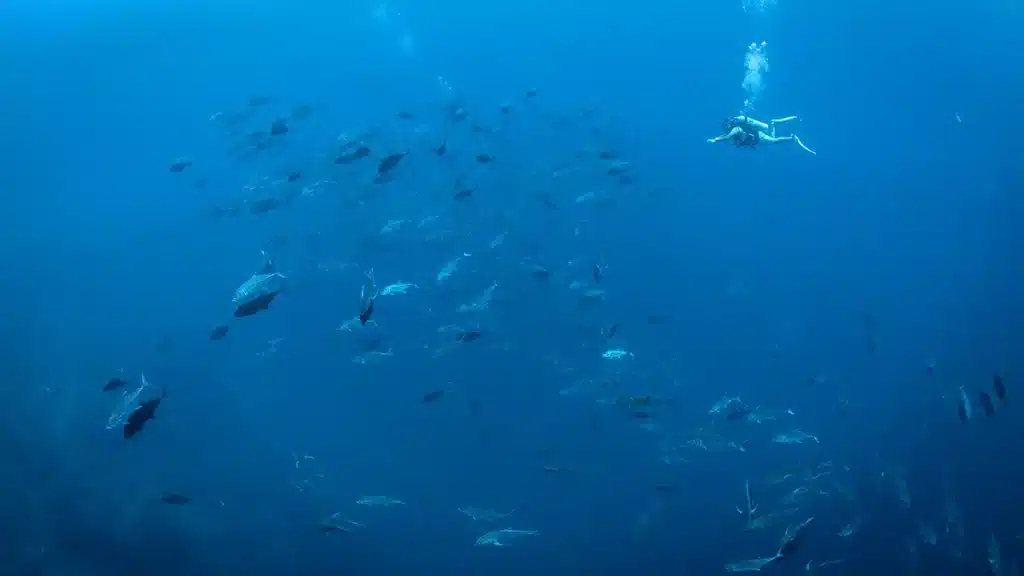
Huge schools of Two-spot Red Snapper (Lutjanus bohar), Bigeye Trevally (Caranx sexfasciatus) and Batfish (Platax) move as if they were a single living organism, compressing and expanding in perfect synchrony. The arrival of a predator is enough to send thousands of fish changing direction in an instant, turning the blue into a living, pulsating mass.
Patrolling around these immense schools are powerful Giant Trevally (Caranx ignobilis), while groups of Blackfin Barracuda (Sphyraena qenie) hover almost motionless in the current, always alert for an opportunity.
The Unicornfish and the Breeding Season
And then there are the Unicornfish (Naso unicornis).
At the beginning of summer, they display an almost flawless green colouration. Return to the same reef a few weeks later, and you’ll notice something different. More and more individuals bear scars along their flanks, the unmistakable signs of battles between males during the breeding season, when the razor-sharp bony “scalpels” at the base of their tails become formidable weapons in fights over territory and females.
It’s the kind of detail many divers never notice. Yet it perfectly illustrates that the reef is far more than a beautiful underwater landscape. It’s a living ecosystem, constantly changing and full of fascinating natural behaviour.
Jackfish Alley: One of Sharm’s Best-Kept Secrets
There’s another phenomenon that remains surprisingly unknown, even among experienced divers.
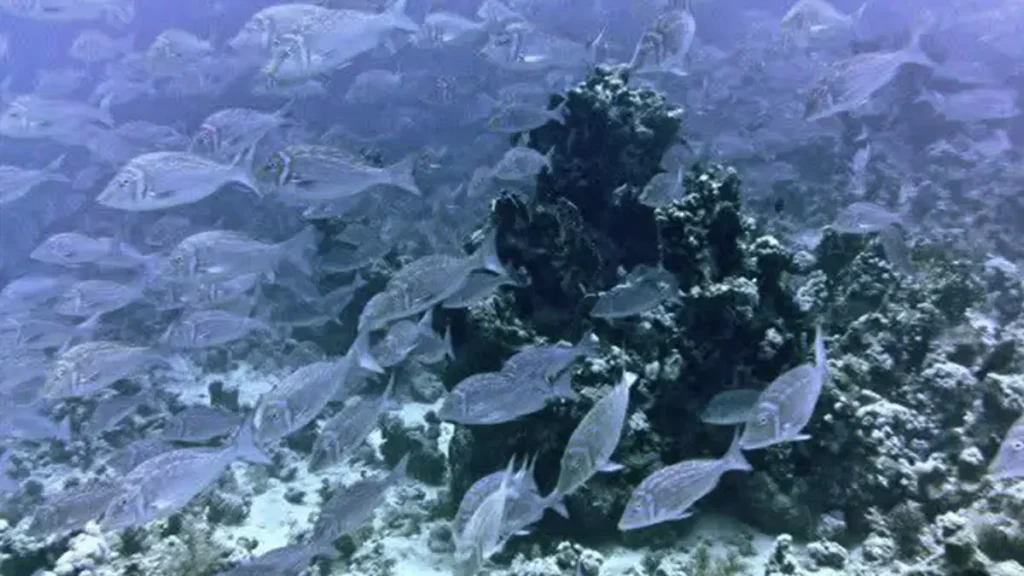
From April to September, especially during the four days before and after the full moon, Jackfish Alley can offer one of the most remarkable underwater spectacles in the Red Sea. Thousands of Blue-scaled Emperor (Lethrinus nebulosus) gather above the reef, forming an immense school that seems to stretch endlessly into the blue.
Nothing in nature is ever guaranteed. The sea doesn’t follow a schedule written by humans. But those who spend enough time underwater learn to recognise its rhythms. Moon phases, currents, and seasonal cycles all influence marine life, and being in the right place at the right time can turn a great dive into an unforgettable memory.
Jackson Reef and Shark Observatory: Pelagic Action in Summer Currents
Summer also brings special moments to Jackson Reef and Shark Observatory.
Strong currents attract large schools of Bigeye Trevally (Caranx sexfasciatus), Giant Trevally (Caranx ignobilis), Great Barracuda (Sphyraena barracuda) and many other pelagic species, adding even more life to reefs that are already among the richest in the Red Sea.
These are the moments when it’s impossible to decide where to look: towards the reef, into the blue, or at the constantly shifting schools of fish dancing between the two.
Photographs capture part of the experience. Videos tell a little more. No image can truly recreate the feeling of hanging weightlessly in the water while thousands of fish move in perfect harmony, speaking a language as ancient as the sea itself.
Every Season Tells a Different Story
That’s one of the greatest beauties of diving in Sharm El Sheikh. There isn’t a “best” season. There are simply different seasons.
Between June and September, the Red Sea stages one of its most spectacular performances: massive fish aggregations, breeding behaviours, nutrient-rich currents, and reefs that, while physically unchanged, offer a completely different experience from one dive to the next.
After thousands of dives in the waters of Sharm El Sheikh, you might think the Red Sea has very few secrets left.
And yet it never stops surprising you.
Every summer there are days when simply descending into the blue brings back the same sense of wonder you felt on your very first dive. Perhaps that’s the true magic of the Red Sea. It never stops telling new stories to those willing to slow down, observe, and listen.
Some of those stories are written in winter. Some in spring. But the ones that happen between June and September, the great aggregations, the breeding cycles, the lunar gatherings at Jackfish Alley, only come around once a year. And they don’t wait.
If August is on your mind, take a look at our current special offers and start planning your dive holiday.