
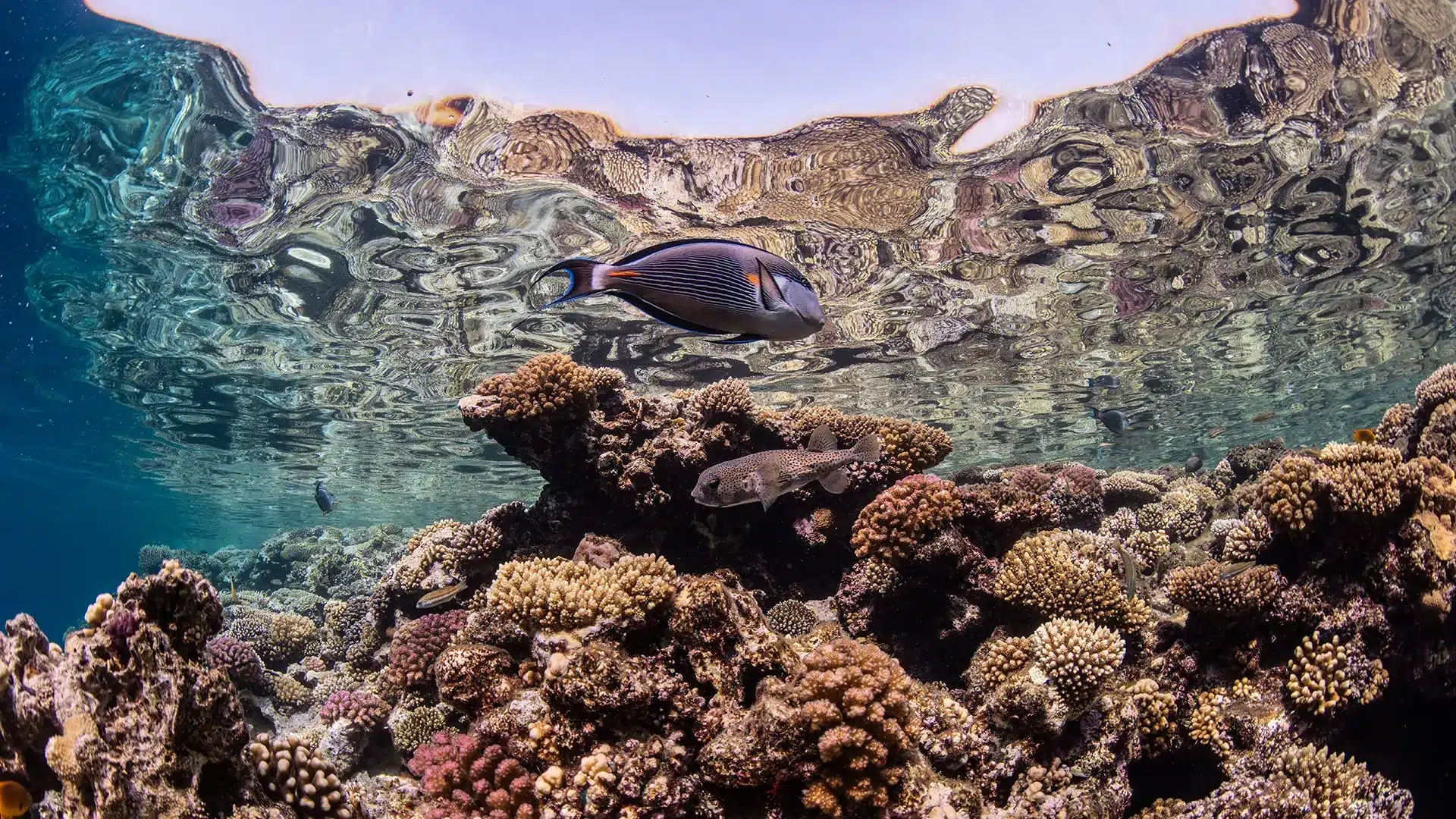
When is the best time to dive the Red Sea? The honest answer: there isn’t really a bad month. Every season gives you something different: warmer water or clearer visibility, busy reefs or quiet boats, a hood or a shorty. Our guide walks you through each season in Sharm el-Sheikh, so you can plan your next diving trip with confidence.
- Water22–25°CMarch cooler, late May warmer
- Air25–32°C
- Visibility25–30m
- Wetsuit5mm
- Water27–30°C
- Air33–40°C+
- Visibility20–30mAugust sometimes lower due to plankton
- Wetsuit3mm full or shorty5mm if you feel the cold
- Water26–28°CSeptember still warm, November cooling
- Air28–35°C
- Visibility25–35m+Often the best of the year
- Wetsuit3–5mm5mm with a hood towards November if you feel the cold
- Water22–23°C
- Air18–24°C
- Visibility20–35mOften crystal clear
- Wetsuit5mm, plus a hoodSome people also use a semi‑dry or dry suit
Diving in Sharm el-Sheikh Season by Season: What You’ll See
Spring: March–May
Spring reefs are busy. Big schools, barracuda, trevally, turtles and napoleon wrasse are all active, and whale sharks show up on the offshore sites, Ras Mohammed especially, most often in May. If you’re diving in April around the full moon, keep an eye out for schools of iridescent emperor fish, one of the more specific spring sightings. The sun is already strong by May, so don’t skip reef-safe sunscreen and something to cover up with on the boat.
Summer: June–August
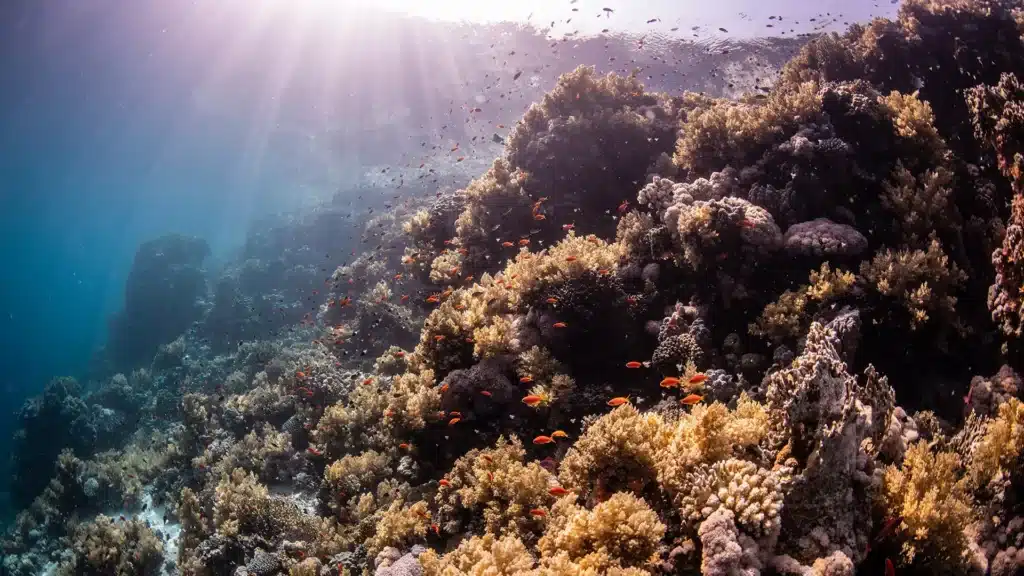
Summer keeps the same cast, big schools, barracuda, trevally, turtles, plus eagle rays more regularly, and the occasional whale shark offshore. The water is at its warmest, which is also why the air above it gets genuinely hot: hydration and sun protection matter more here than at any other point in the year, arguably more than the wetsuit choice itself.
Autumn: September–November
Autumn is where visibility tends to peak, often 25 to 35 metres or more. Reefs stay full: big schools of jacks, turtles, whitetip reef sharks, napoleon wrasse, moray eels and eagle rays. October in particular is the month we’d point most people towards if they asked us to pick one: warm water, excellent visibility, a climate that’s finally comfortable, and marine life still going strong. By November the water is noticeably cooler than in September, and how much that matters really depends on you: some divers stay comfortable in a 3mm right through the season, others feel it and are better off switching to a 5mm with a hood.
Winter: December–February
Winter reefs are quieter, but the water is often at its clearest. You’ll still find turtles, barracuda, trevally, napoleon wrasse and moray eels. If you’re arriving from a UK, Italian or northern European winter, 22°C water tends to feel a lot warmer than it sounds on paper. This is also the windiest stretch of the year, so it’s worth packing a jacket or fleece to keep on the boat. A 5mm suit with a hood is fine for the water, or if you’re someone who feels the cold, you can opt for a semi-dry or dry suit. A tip from our team: bring two suits you can swap between dives to stay drier. For example, two 5mm suits and two hoods, alternating between dives.
High Season or Low Season? Both Have a Case
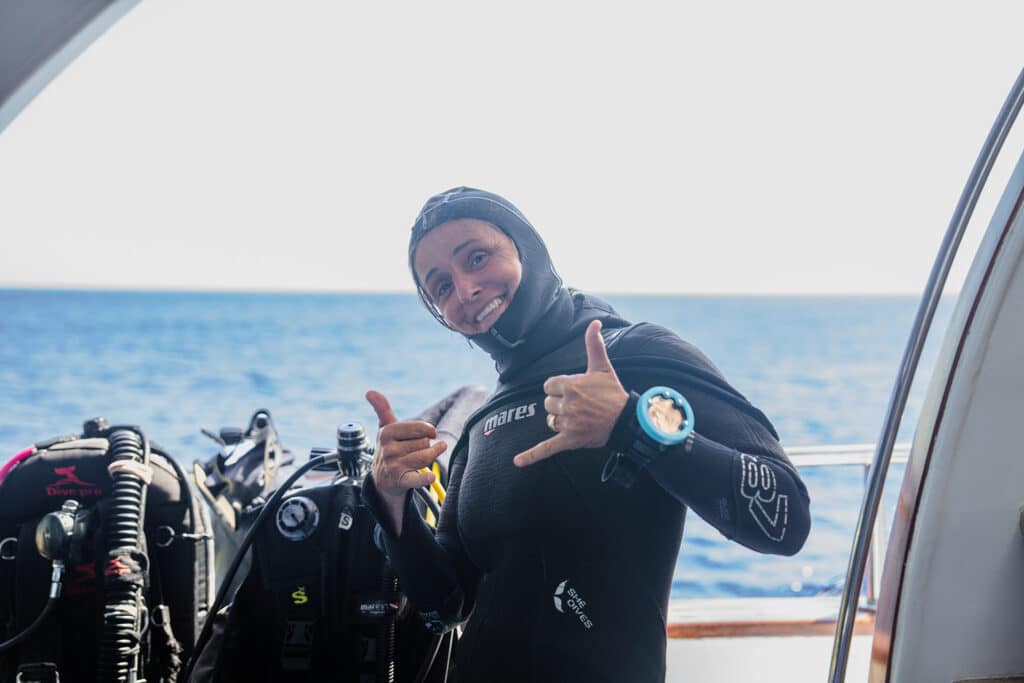
High season in Sharm el-Sheikh covers October and November, plus Christmas, New Year and Easter. These weeks bring the liveliest atmosphere on the boats and around the dive centre, but they also mean booking ahead if you want a specific date or course slot.
January (past the first week) and February are our quieter months. Air temperatures drop, so surface intervals are colder than the rest of the year, and the wind can be more of a factor. What you get in return is smaller boats, more one-on-one time with your instructor or guide, and a Naama Bay that feels less like a resort town and more like the place we actually live in. Neither season is the “right” one. It depends on what you’re trying to get out of the trip.
What’s the Best Time to Dive the Red Sea for You?
If you want the fewest people on the boat and don’t mind a light jacket between dives, January or February is worth considering, especially to escape a colder winter back home. If you love warm water without a thick wetsuit, June to August delivers, along with the best odds of spotting an eagle ray. If visibility matters most to you, or you want the best overall balance, October is hard to beat. And if you’re coming for a whale shark, May and June are the months we’d flag first, though nothing in the ocean is ever guaranteed.
In the end, the best time to dive the Red Sea is the one that fits what you’re looking for, because the reef doesn’t really have an off season. Come and see it for yourself.
Best Time to Dive the Red Sea: FAQs
Found your season? Start planning your next dive holiday.